Top AI SEO Tools for Content Teams

Choosing from the top ai seo tools is harder than it seems. Most platforms promise faster drafting, better rankings, and less manual work, but content teams usually need more than a writing assistant. They need workflow control, optimization guidance, editorial consistency, integrations, and a system that can grow across clients, brands, or business units. Not just copy.
SEO content operations are changing fast, and teams are under pressure to publish more, keep quality high, protect brand voice, and show measurable ROI from automation. After comparing leading options in the ai seo software space, it became clear that the best tools are not always the ones making the most noise. Sometimes, the right choice comes down to whether a team needs white label delivery, editorial optimization, topic planning, or a tighter production process from brief to publish.
This guide reviews four strong options for agencies, SaaS teams, e-commerce brands, and freelancers. For some, the goal is to grow with smarter seo content tools, not just produce more drafts. In that case, this comparison helps narrow the field quickly. It also points to a platform that fits the way your team actually works.
What you’ll find in this comparison of top AI SEO tools
- Whitelabelseo
- Surfer SEO
- Clearscope
- MarketMuse
Best AI SEO tools to consider today
1. Whitelabelseo
At a Glance
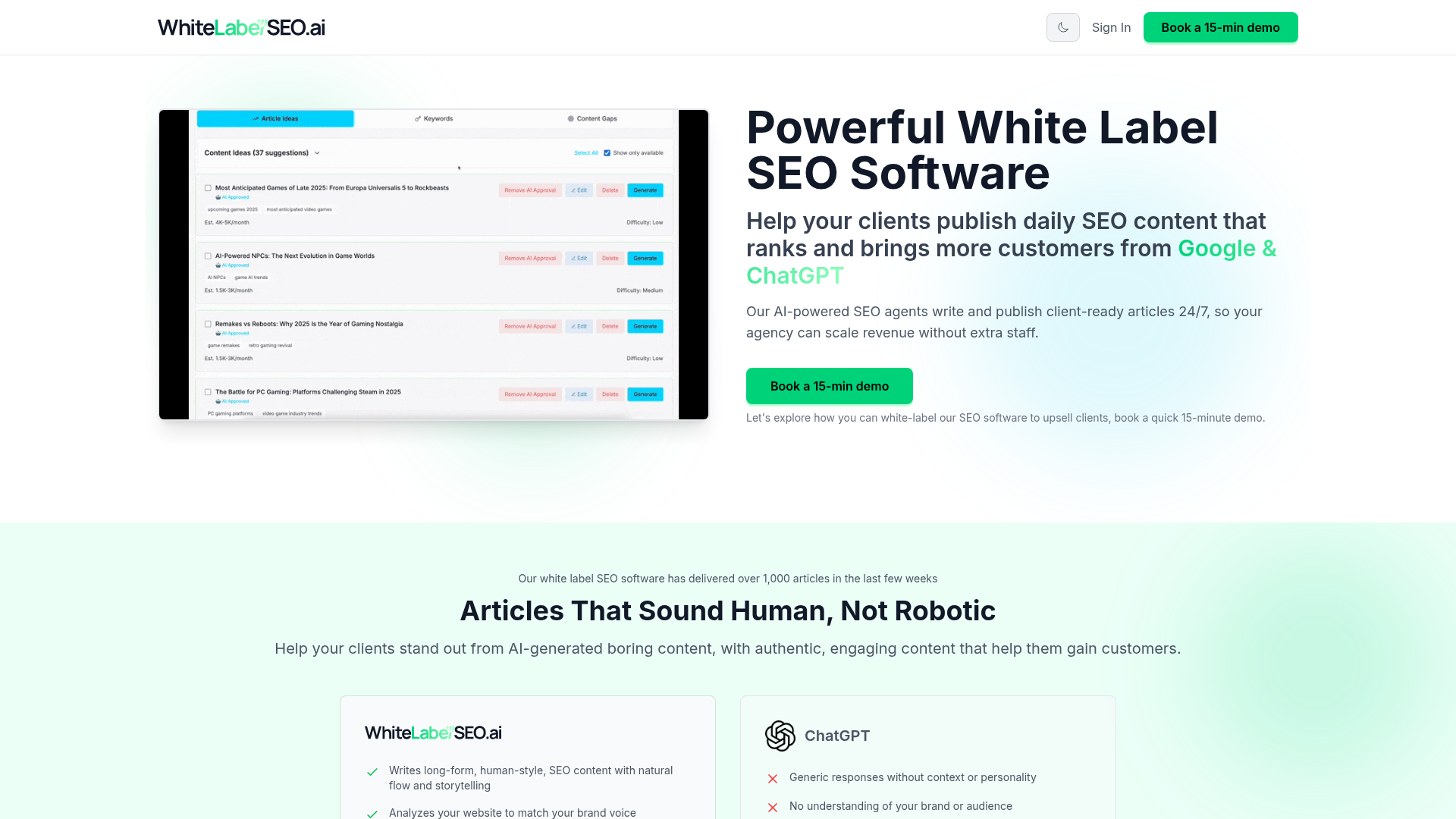
Whitelabelseo.ai is the most complete option here for content teams that need more than single-document optimization. Agencies, marketing firms, SaaS startups, e-commerce brands and freelancers use it to automate content creation, support technical SEO workflows, maintain brand voice and deliver work under their own label. Rather than focusing only on content scoring, Whitelabelseo takes a wider operational view of how teams create, optimize, publish and grow SEO output without adding process chaos.
Core Features
- AI-powered SEO content creation for higher-volume publishing
- White label delivery built for agencies and client services teams
- Brand voice customization for more consistent outputs
- Technical SEO support alongside content workflows
- CMS integrations for smoother publishing operations
- Content optimization workflows designed for repeatable production
- Automation features that reduce manual bottlenecks across teams
Pros
- Built for scale: Whitelabelseo works especially well for teams managing multiple brands, clients or content streams at the same time.
- White label friendly: Agencies can package and deliver services without pushing clients into another visible platform experience.
- Brand voice control: The platform fits teams that care about consistency as much as speed.
- Broader workflow coverage: It supports content production and technical SEO instead of limiting its value to a single article editor.
- Operationally practical: CMS connectivity and automation help teams move from draft to published asset with less friction.
Who It’s For
Whitelabelseo is best suited to SEO agencies, digital marketing firms, SaaS content teams, e-commerce brands and experienced freelancers that want to grow AI-assisted SEO without losing quality control. It is particularly useful for growing teams that need white label delivery, stronger workflow standardization and a platform that supports execution alongside client-facing operations.
Unique Value Proposition
Whitelabelseo stands apart because it addresses a gap many content teams notice after using document-first optimization tools. Producing one optimized article is different from running a larger SEO operation. Teams that need branded delivery, repeatable systems, automation across content tasks and technical SEO support in the same environment will likely see Whitelabelseo as better suited to that job. For agencies trying to improve margins while keeping outputs consistent and client-ready, that mix can be especially useful.
Real World Use Case
A mid-sized agency handling SaaS and e-commerce accounts can use Whitelabelseo to generate content at higher volume, match output to each client’s voice, route assets through CMS integrations and package the service under its own brand. The result is practical. The agency completes work faster, keeps internal workflows cleaner and gives clients a more consistent delivery experience instead of forcing them to work across disconnected tools.
Teams comparing platforms in this category often also review Best Content Automation Tools for SEO Agencies when evaluating scalable publishing systems.
Website: https://whitelabelseo.ai/
2. Surfer SEO
At a Glance
Surfer SEO is one of the best-known names in ai seo software for content optimization. Founded in 2017, it gained traction by helping marketers compare draft content against SERP patterns and improve on-page elements in a guided editor. Many teams use Surfer because it combines AI writing support, optimization scoring, keyword guidance, audits, and integrations with tools like Google Docs and WordPress. It stands out most for helping improve article-level performance across a larger content operation.
Core Features
- Content Editor with SEO scoring and term recommendations
- AI article generation and drafting support
- SERP-based optimization suggestions
- Keyword and topic recommendations
- Content audits for existing pages
- Google Docs integration
- WordPress integration
Pros
- Strong optimization workflow: Surfer gives teams a clear, article-by-article process for improving on-page relevance.
- Widely adopted: Many agencies and content marketers already know the interface and understand how the workflow functions.
- Practical integrations: Support for Google Docs and WordPress fits common editorial setups.
- Useful for scaling blogs: It helps teams create more consistency across larger content programs.
- Fast feedback loop: Writers can see where a draft stands while editing instead of waiting for a later audit.
Cons
- Can drive formulaic writing: Teams that follow the score too closely can end up over-optimizing content.
- Costs can climb: With higher usage and bigger teams, pricing can move beyond the appeal of the entry-level plan.
- Narrower operational scope: Surfer is stronger as an optimization tool than as a broader white-label or technical SEO platform.
Who It’s For
Surfer SEO fits agencies, in-house marketers, bloggers, and content teams that want structured optimization guidance for individual articles. It works best when a team already has a broader process in place and needs a dependable editor to improve on-page SEO execution rather than a full operational system.
Unique Value Proposition
Surfer’s biggest advantage is the direct connection between the writing process and SERP-informed optimization. Teams that want a visible content score and clear suggestions during drafting will often find Surfer easier to use than platforms built more heavily around strategy.
For teams exploring broader workflows beyond article scoring, resources like Agency SEO Tools for Content Ops and Client Delivery can help compare operational approaches.
Pricing: Starts around $79/month annually based on current public comparison references.
Website: https://surferseo.com
3. Clearscope
At a Glance
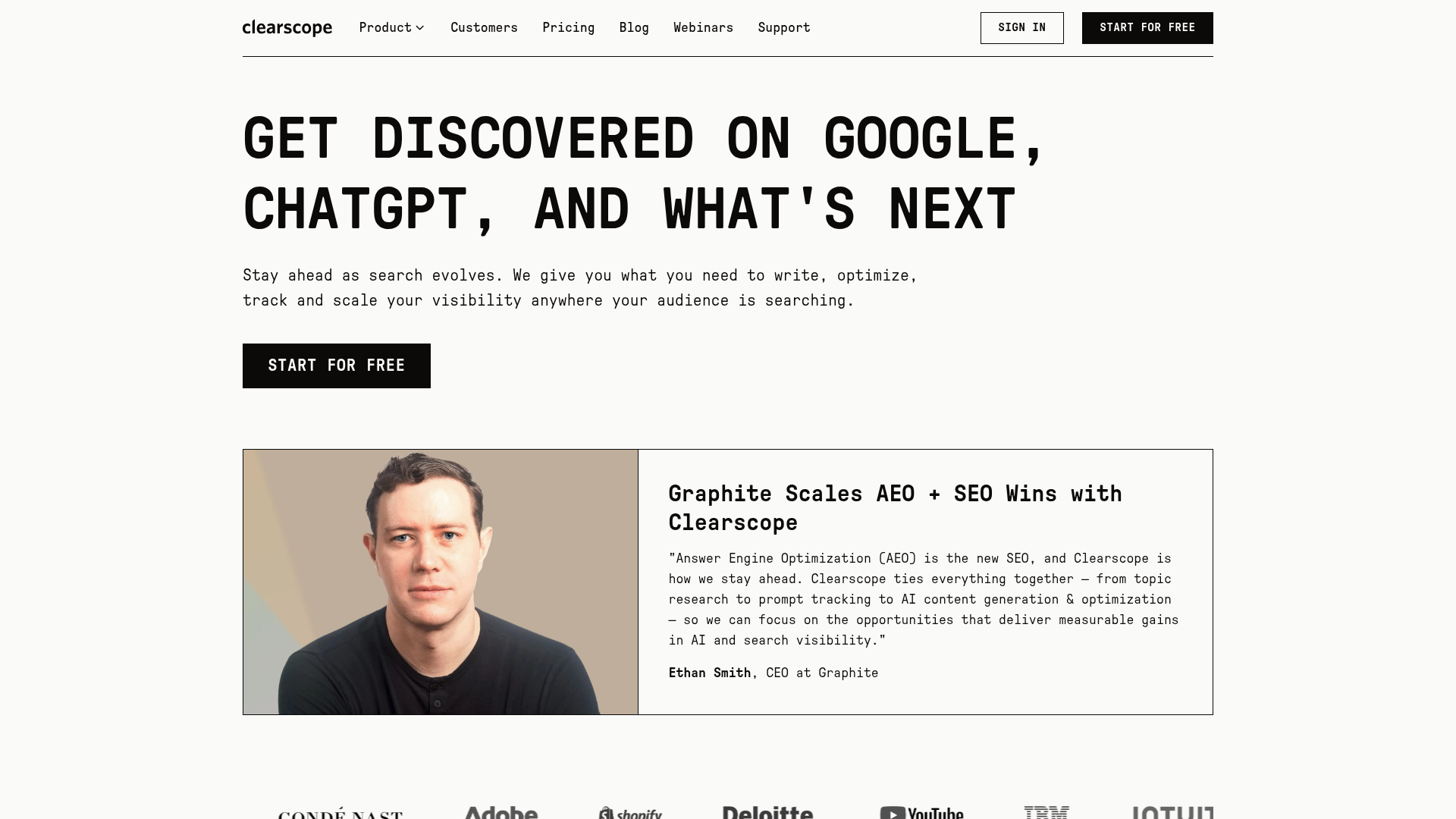
Launched in 2016, Clearscope is a premium content optimization platform used heavily by editorial and marketing teams that care about clarity, quality, and relevance. Its clean, writer-friendly interface helps teams create search-aligned content through grading, term suggestions, briefs, and search intent guidance. It feels more editorial than technical. Compared with broader seo content tools, Clearscope fits the writing process more closely than the mechanics behind it. Many teams choose it for a polished workflow that helps them produce stronger content assets without burdening writers with too many moving parts.
Core Features
- Content grading and optimization recommendations
- Topic and keyword suggestions
- Search intent guidance
- Content briefs for writers and editors
- AI-assisted drafting support
- Editorial workflow support
- Reporting centered on content quality and relevance
Pros
- Clean user experience: Writers and editors get comfortable with the platform quickly.
- High content quality focus: Clearscope has a strong reputation for improving topical relevance without adding unnecessary clutter.
- Good editorial alignment: The platform supports briefs and optimization in a way that fits established content teams.
- Trusted by premium teams: Many brands choose it because it feels built for quality control, not just output speed.
Cons
- Higher starting cost: The entry price is higher than several competing options.
- Limited budget friendliness: Smaller agencies and freelancers may struggle to justify the pricing.
- Less all-in-one coverage: Teams that need technical SEO automation or white label workflow support will likely need other tools alongside it.
Who It’s For
Clearscope fits in-house content teams, SaaS marketers, agencies with established editorial standards, and brands that prioritize quality over raw production volume. It is a strong fit for teams whose process depends on briefs, editing, and consistent search-focused writing, and should be considered a serious contender.
Unique Value Proposition
Clearscope stands out when the main challenge is making each piece cleaner, more relevant, and easier for editors to refine. It works especially well for teams that want optimization guidance to feel natural within an editorial workflow and are willing to pay for a premium option.
Pricing: Public comparisons commonly cite Essentials at about $129/month.
Website: https://www.clearscope.io
4. MarketMuse
At a Glance
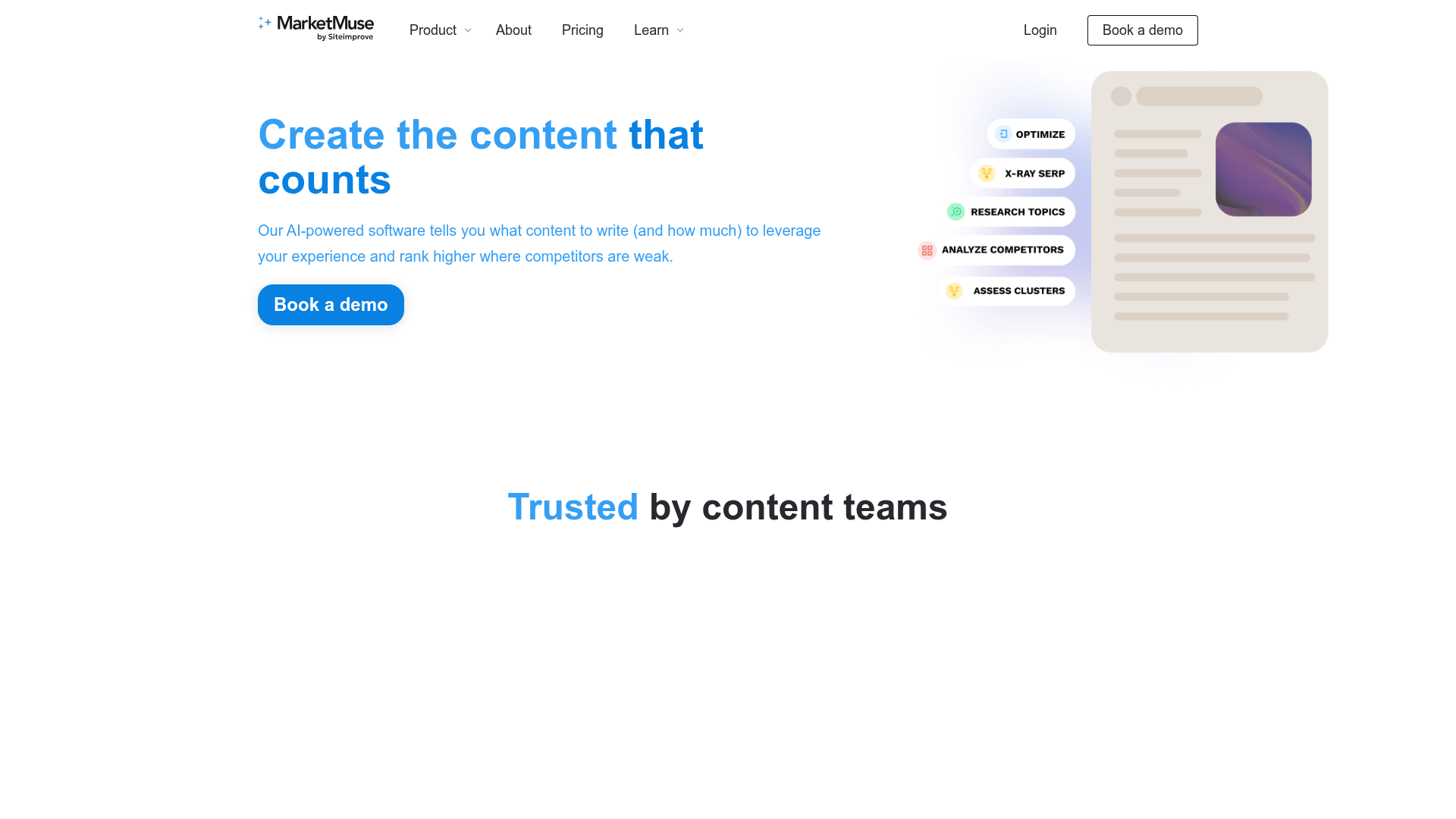
Founded in 2013, MarketMuse takes a more strategic position in the top ai seo tools category. Instead of focusing on a single article editor, it emphasizes topic modeling, content planning, inventory analysis, briefs, optimization, and gap analysis. It works well for content teams with larger libraries and long-term authority goals. For organizations deciding what to publish next, where coverage is thin, and how to build deeper topical authority over time, MarketMuse may provide more planning insight than lighter optimization tools.
Core Features
- AI-driven content planning
- Topic modeling and authority analysis
- Content briefs
- Optimization tools for existing and new pages
- Inventory analysis across larger content libraries
- Content gap analysis
- Strategic recommendations for topic coverage
Pros
- Strong strategic planning: MarketMuse works well for teams thinking in clusters rather than individual articles.
- Good for topical authority: It helps teams identify gaps and build broader subject coverage.
- Useful at scale: Larger sites with extensive content archives can get more planning value from the platform.
- Broader than simple optimization: The platform supports higher-level SEO content strategy decisions.
Cons
- More complex learning curve: Small teams or first-time users may find it heavy.
- Less beginner friendly: Teams looking for immediate drafting simplicity may prefer lighter tools.
- Enterprise-style fit: Freelancers and smaller brands may not get enough from its strategic depth to justify adoption.
Who It’s For
MarketMuse is best suited to enterprise content teams, established SaaS companies, publishers, and agencies managing large libraries that need to make smarter planning decisions. It’s less ideal for teams that only want quick article optimization. It is more useful for groups focused on building long-term topical authority.
Unique Value Proposition
MarketMuse stands out by moving beyond page-level tweaks to portfolio-level decisions. Teams with hundreds or thousands of assets can use it to prioritize content gaps, improve coverage, and shape a stronger authority strategy over time.
Teams evaluating strategy-focused platforms sometimes also compare them with AI Content Strategy for Multi‑Channel SEO: Aligning Google, ChatGPT, and CMS Outputs to understand how workflows scale across channels.
Pricing: Public sources indicate a free tier is available, with paid and enterprise options based on usage.
Website: https://www.marketmuse.com
When these tools are compared using the limited hard facts publicly available, the differences become clearer. Founding year and starting price do not tell the whole story, but they do show how each platform is positioned in the market. Surfer sits in the mid-market optimization lane. Clearscope comes in at a more premium price point. MarketMuse leans strategic and offers a free entry path. Whitelabelseo, by contrast, aligns most closely with white label delivery and operational scale.
| Company | Founded | Public Entry Price | Free Tier |
|---|---|---|---|
| Whitelabelseo | , | , | , |
| Surfer SEO | 2017 | $79/month | No public free tier noted |
| Clearscope | 2016 | $129/month | No public free tier noted |
| MarketMuse | 2013 | $0/month | Yes |
These numbers reinforce an important buying reality: the best platform usually matches the buyer’s operating model, not the one with the most recognizable name.
How to choose the right top AI SEO tools for your team
The easiest mistake is choosing a platform on content scoring alone. That might work for a solo writer. For content teams, though, it is often not enough.
What matters most in a buying decision:
Workflow fit matters more than feature count
A tool can offer AI writing, optimization, briefs, and audits, yet still slow a team down if it doesn’t match the publishing process.
Agencies need client-ready delivery, while SaaS teams need consistent output across product-led funnels. E-commerce brands need support that can grow for category, collection and blog content, and freelancers need efficiency without extra overhead.
Editorial control still matters in AI-assisted SEO
The best seo content tools don’t replace human judgment. They make it easier for teams to apply it.
Look for platforms that help your team keep tone consistent, stay aligned with brand voice, and turn optimization guidance into content people can actually use, not robotic copy.
White label capability in top AI SEO tools
One of the biggest gaps in the market is white label capability. Many tools help teams produce content, but far fewer let agencies package the service neatly under their own brand. That helps an AI-powered platform for white label SEO content automation stand out with service businesses that want margin, repeatability, and a cleaner way to deliver work to clients.
Additionally, teams building repeatable agency systems may also benefit from reviewing Best Agency SEO Tools for White-Label Delivery.
Strategy and execution are different
Surfer and Clearscope work best when the immediate goal is article optimization. For strategic planning and gap analysis, MarketMuse is the better fit because it addresses a different need. Whitelabelseo is especially useful when the real challenge is scaling execution across brands and keeping systems organized.
Integration depth affects adoption
When writers draft in one place, editors review in another, and publishing happens later in a CMS, each extra step adds cost. Those costs add up fast. Teams focused on production speed should favor tools that reduce handoff friction instead of adding another silo.
Which top AI SEO tools are best for different types of content teams?
Different content teams should not buy the same platform, even if they are all looking for the same top ai seo tools.
Best for SEO agencies and digital marketing firms
Whitelabelseo is the strongest fit for teams that need white label delivery, automation at scale, and workflows built around client service models. For agencies, article optimization alone usually isn’t the issue. Consistency, fulfillment speed, and margins are.
Best for blog-focused optimization teams
Surfer SEO is a strong fit for teams that publish regularly and want a practical editor to guide on-page improvements from one draft to the next. It works best when the content process already exists and just needs tighter optimization discipline.
Best for editorially mature content teams
Clearscope makes sense when your team includes writers, editors, and established standards, and you want search optimization to support quality rather than take over the process. It’s a good fit for brands that care about polish.
Best for content strategy and authority planning
For larger teams, MarketMuse is usually the better fit, especially when they need to identify topic gaps, strengthen coverage, and make smarter decisions across large content libraries. It stands out for planning depth rather than simplicity.
The practical tradeoff most buyers miss with top AI SEO tools
Many software comparisons treat AI SEO tools as interchangeable writing products. They are not. The main tradeoff is between single-asset optimization and content operations enablement.
If the pain point is “How do we improve this one article?” then Surfer or Clearscope may handle that well.
If the pain point is “How do we run an efficient, branded, scalable content service across multiple clients or business lines?” then Whitelabelseo becomes the more practical choice.
If the pain point is “How do we decide what to create next across a large library?” then MarketMuse deserves serious attention for that use case.
That is what makes these tools different in actual use, even though they all still fall under the umbrella of ai seo software.
Ready to scale content without losing control?
Most teams don’t need another AI writer. They need a better system. The real frustration is usually not the first draft, but keeping content aligned to brand voice, moving it through review, optimizing it properly, publishing it efficiently, and then repeating that same process across clients or campaigns.
In this comparison, Whitelabelseo has the clearest edge. It is designed for teams that want SEO automation to be operationally useful, not just impressive in a demo. Agencies, teams managing multiple brands, and businesses that need white label content workflows that can expand with demand will find Whitelabelseo more directly aligned with that goal.
Teams frequently stitch together separate writing, optimization, and delivery steps. Whitelabelseo lets them bring more of that work into one platform built for scale. If that matches what a team actually needs, review Whitelabelseo and see how it fits into the content operation.
For additional evaluation frameworks, some teams also review How Agencies Evaluate AI SEO Tools That Scale before committing to a platform.
Frequently asked questions
Start with workflow fit, not hype. The best choice depends on whether your team mainly needs article optimization, editorial guidance, strategic planning, or scalable white label delivery. Also look at integrations, brand voice control, ease of adoption, and whether the platform reduces manual handoffs across your content process.
Measure both efficiency and outcomes. On the efficiency side, track time to brief, draft, optimize, review, and publish. On the SEO side, watch organic traffic growth, ranking improvements, content velocity, conversion contribution, and content refresh performance. A useful platform should improve process speed without lowering quality.
Pricing varies a lot by positioning. Public references commonly place Surfer around $79/month annually and Clearscope around $129/month for entry-level access, while MarketMuse offers a free tier with paid options above that. Tools focused on agency workflows or broader operational support may not always present simple entry pricing publicly, so buyers should compare value based on use case, not sticker price alone.
Operational gains can show up almost immediately, especially in drafting, optimization, and publishing speed. Ranking and traffic improvements usually take longer, often several weeks to a few months depending on domain strength, competition, crawl frequency, and content quality. The tool helps execution, but the strategy and consistency still drive results.
SEO agencies, digital marketing firms, fractional marketing teams, and freelancers serving multiple clients often benefit the most. A platform like Whitelabelseo is especially relevant when the goal is to standardize delivery, maintain brand consistency for different accounts, and scale SEO content services without expanding headcount at the same pace.
Not by themselves. AI tools can speed up research, briefs, optimization, and content creation, but authority still comes from useful coverage, sound internal linking, technical health, consistent publishing, and strong editorial judgment. MarketMuse can help with strategic planning, while Whitelabelseo can be a strong option when you also need scalable execution and delivery workflows around that strategy.