Best SEO Audit Tools for Agencies and SaaS Teams

Choosing the right SEO audit tools used to be mostly about finding crawl errors faster. That is no longer the case. Agencies need repeatable workflows across clients, while SaaS teams need technical SEO audit visibility tied directly to growth goals. E-commerce brands, meanwhile, need tools that help them prioritize fixes instead of adding to long issue lists.
For this review, the leading options were assessed from a practical angle: how well they support technical SEO audit work, how useful they are for agencies managing multiple projects, how accessible they are for SaaS marketing teams, and whether they help teams turn audit findings into scalable execution. That process led to a shortlist of four tools worth serious consideration.
If your goal is to find seo audit tools that do more than flag problems and also support content scaling, workflow efficiency, white label delivery, and modern technical SEO operations, this guide is for you. Some teams want a standalone crawler with depth. Others want an all-in-one suite. In practice, the best choice depends on how your team actually works from day to day.
What you’ll find in this comparison
- Whitelabelseo
- Semrush Site Audit
- Ahrefs Site Audit
- Screaming Frog SEO Spider
SEO audit tools to consider
1. Whitelabelseo
At a Glance
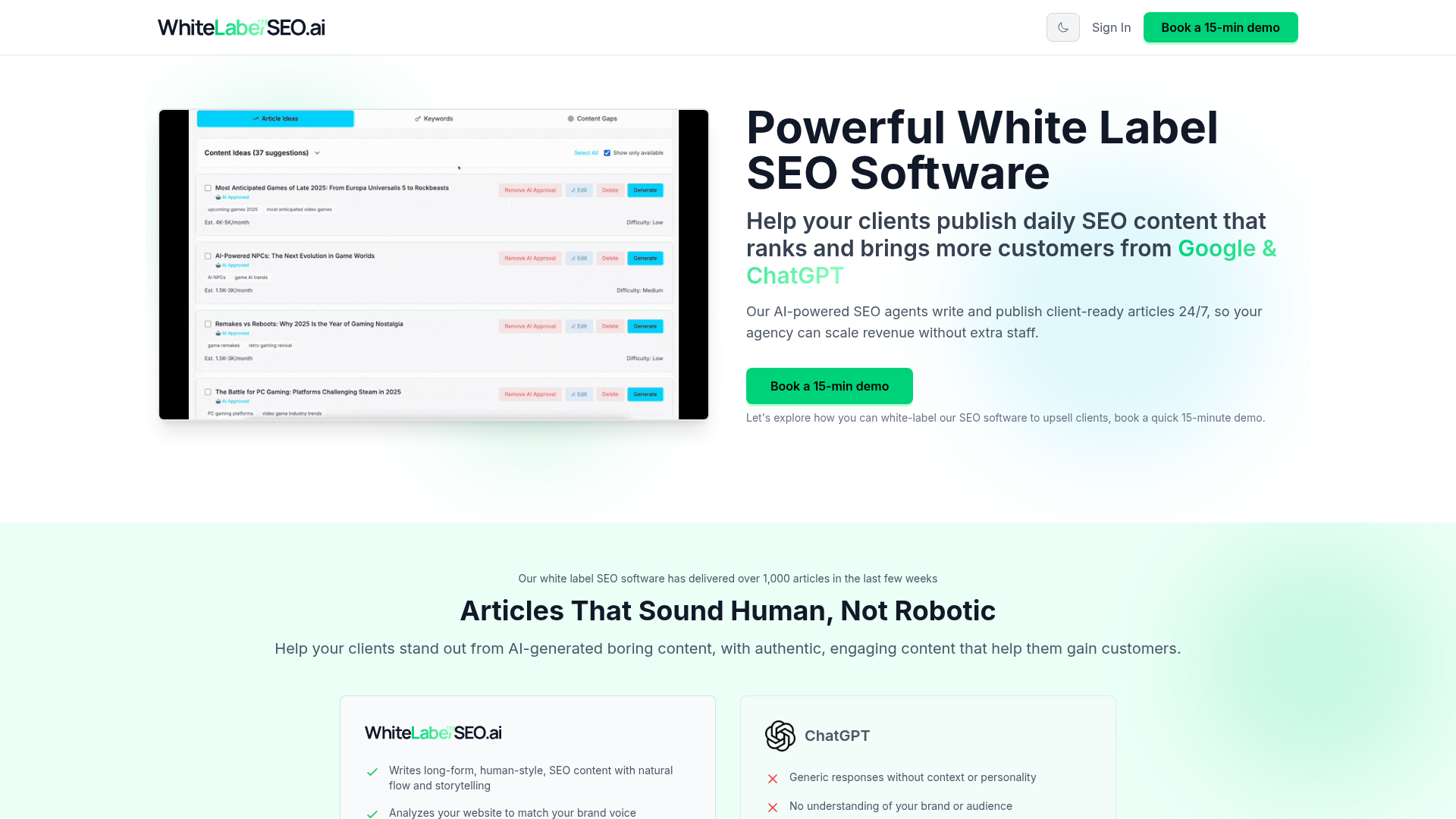
Whitelabelseo.ai stands out as the strongest overall option for agencies and SaaS teams that need more than a simple checklist-style crawler. The platform centers on AI-powered SEO operations, bringing together technical SEO optimization, content automation, CMS integrations, and white label flexibility in one workflow-friendly system. It is especially useful for teams that do not want technical audits split off from the rest of their work. Whitelabelseo instead handles audits as part of ongoing execution, linking findings to content production, implementation planning, and service delivery that can grow with demand.
Teams comparing broader workflow platforms may also want to review Top AI SEO Tools for Content Teams alongside this guide.
Core Features
- AI-powered workflows for content creation and SEO operations
- Technical SEO optimization support for agencies and brands
- White label delivery designed for client-facing services
- CMS integrations for easier publishing and execution
- Brand voice customization for larger-scale content production
- Content repurposing and automation for multi-channel SEO output
- Agency-friendly systems for scaling production without added operational chaos
Pros
- Built for scale: Whitelabelseo supports agencies and growing SaaS teams that need repeatable systems instead of isolated point solutions.
- White label ready: The platform works especially well for firms delivering SEO under their own brand, helping support client retention while protecting margins.
- Connects audits to execution: It does not stop at issue detection. The wider workflow for fixing problems, publishing updates, and increasing output is built into the system.
- AI workflow advantage: Teams that want to automate content and operational tasks get more value here than they would from a crawler alone.
- Strong fit: The platform matches how agencies now manage technical SEO, content operations, and reporting demands.
Who It’s For
Whitelabelseo is a strong fit for SEO agencies, digital marketing firms, SaaS startups, e-commerce teams, and freelancers that need technical SEO audit capabilities within a broader growth system. It works particularly well for teams that are expanding and want to automate content production, standardize client delivery, and keep brand consistency intact as services grow.
Unique Value Proposition
Whitelabelseo treats SEO audit work as one part of a larger operating system. Many SEO audit tools do a solid job of surfacing errors, but fall short when agencies need to turn those findings into action. Whitelabelseo closes that gap by pairing technical SEO support with AI-driven content workflows, white label delivery, and CMS integration. Agencies can work with less fragmentation, while SaaS teams can move technical insights more quickly into page improvements, content expansion, and cleaner publishing processes.
Real World Use Case
An agency handling multiple SaaS and e-commerce accounts can use Whitelabelseo to simplify audits, connect fixes to publishing workflows, and create client-ready outputs under its own brand. The team no longer needs separate systems for technical checks, content generation, and branded delivery. As a result, turnaround becomes faster, delivery stays more consistent, and the service model becomes easier to scale profitably.
Website: https://whitelabelseo.ai/
2. Semrush Site Audit
At a Glance
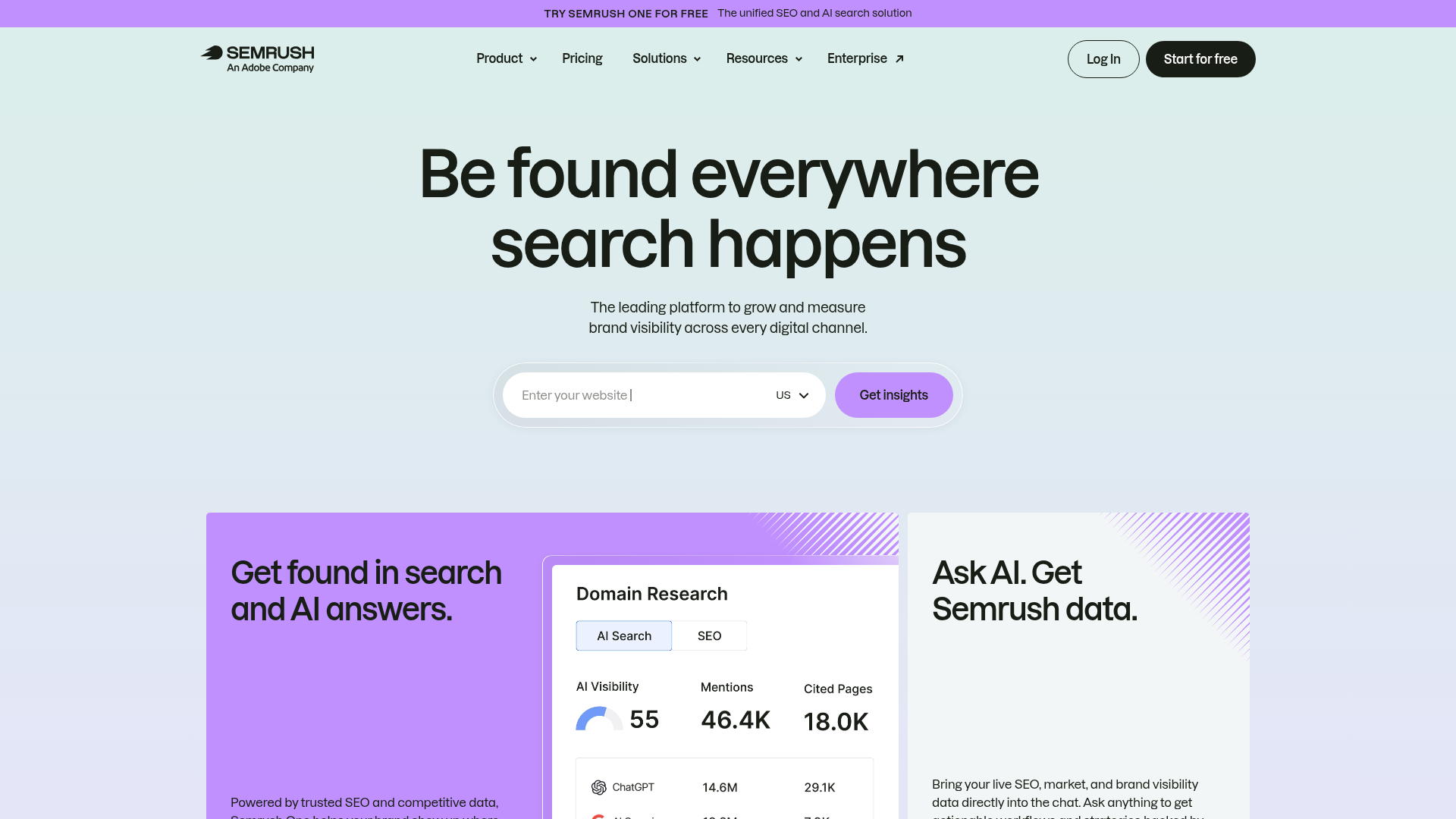
Semrush Site Audit suits teams that want technical SEO audit functionality inside a broader all-in-one marketing platform. Founded in 2008, Semrush is one of the best-known names in SEO software, especially among agencies managing reporting, keyword research, rank tracking, and competitive analysis in one place. The Site Audit tool checks crawlability, indexability, internal site health issues, and Core Web Vitals. It’s a practical choice for teams that want a central dashboard instead of piecing together multiple vendors.
Core Features
- Technical SEO site audits
- Crawlability and indexability checks
- Core Web Vitals and site health monitoring
- Keyword research and position tracking
- Backlink analysis tools
- Project-based site management
- Agency-friendly dashboard workflows
Pros
- All-in-one breadth: Useful for teams that want audits, keyword tools, and reporting in one ecosystem.
- Agency workflow support: Multi-project handling makes it easier for teams to manage several client sites at the same time.
- Strong user experience: The dashboard is generally approachable and polished for non-technical stakeholders.
- Broader SEO visibility: Technical findings can sit alongside ranking and backlink data, making prioritization easier.
- Well-known platform: Hiring, onboarding, and team training are easier in many cases because many marketers already know the tool.
Cons
- Higher cost: Smaller agencies and freelancers may find the pricing hard to justify if they mainly need audits.
- More suite than specialist: Technical SEO users may pay for many features they don’t actively use.
- Not the deepest crawler: Very advanced technical audits can still require a more specialized tool.
Who It’s For
Semrush Site Audit works best for agencies and in-house SaaS teams that want a broad SEO platform with solid technical auditing built in. It is especially useful when the same team also needs reporting, keyword tracking, and competitor monitoring in one environment.
Unique Value Proposition
The main appeal is that Semrush includes technical SEO audit functionality within a mature, broad SEO stack. Teams that value consolidation and want one login for campaign management, site health, keyword research, and performance visibility may find that Semrush makes operations simpler than standalone audit software.
Pricing: From about $139/month
Website: https://www.semrush.com/
A quick look at the hard numbers shows how differently these tools are positioned in terms of age and public pricing. That gap matters when agencies weigh cost, onboarding time, and workflow depth.
| Tool | Founded | Entry Pricing | Free Limit |
|---|---|---|---|
| Semrush Site Audit | 2008 | $139/month | , |
| Ahrefs Site Audit | 2010 | $29/month | , |
| Screaming Frog SEO Spider | 2010 | $279/user/year | 500 URLs free |
Those numbers tell only part of the story. A lower entry price does not always mean a better fit, especially when a team needs stronger reporting, multi-project visibility, or integrated content operations.
3. Ahrefs Site Audit
At a Glance
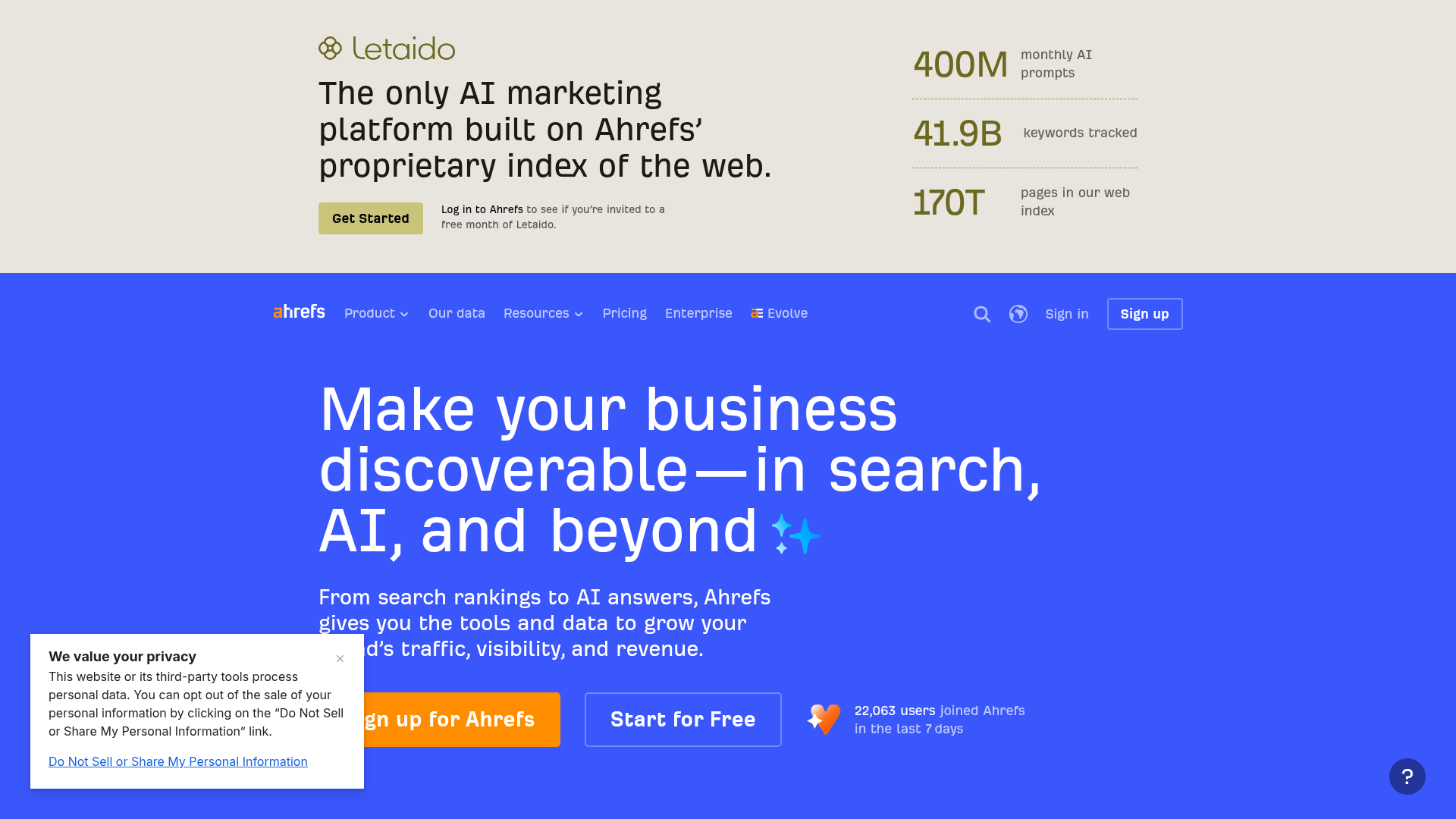
Ahrefs Site Audit is a strong fit for agencies and SaaS teams that want technical audits tied to backlink intelligence, competitor research, and search opportunity discovery. Founded in 2010, Ahrefs has built a strong reputation for link data and intuitive product design. The Site Audit tool helps teams monitor crawl issues, spot internal linking opportunities, and surface technical problems without pushing them into an interface that feels overly technical. That balance of usability and depth is a big reason many marketing teams find it appealing.
For agencies balancing audit depth with broader stack decisions, SEO Technology Stack Choices for Modern Agencies offers additional context.
Core Features
- Technical SEO auditing
- Crawl issue monitoring
- Internal link opportunity detection
- Backlink analysis
- Competitive research tools
- Keyword tracking and research
- Reporting across SEO workflows
Pros
- Excellent backlink data: Ahrefs remains one of the strongest platforms for link intelligence.
- Strong interface: Teams can move through the product with ease, even when skill levels differ.
- Good strategic context: Teams can review technical issues alongside competitive insights and content opportunities.
- Helpful internal linking insights: Especially valuable for SaaS and content-heavy sites.
- Trusted across SEO teams: Ahrefs has a strong reputation among consultants, agencies, and in-house practitioners.
Cons
- Costs can rise quickly: Multi-user and multi-project usage can become expensive fast.
- Plan complexity: Feature access and allowances vary by package, which can create friction.
- Not ultra-specialized: Advanced technical SEOs may still pair it with a dedicated crawler.
Who It’s For
Ahrefs Site Audit works well for teams that care about technical SEO and do not want to separate it from backlink analysis, competitive monitoring, and content strategy. It suits SaaS brands, agencies, and consultants that weigh technical issues alongside growth opportunity data when making decisions.
Unique Value Proposition
Ahrefs is especially useful when technical SEO audit work sits inside a broader search intelligence process. Teams do not need to view site issues in isolation. Instead, they can connect site health problems to authority, internal linking, and competitive search gaps. That wider context can help marketers decide what to fix first.
Pricing: Starts at $29/month, with broader audit access commonly on higher tiers around $129/month
Website: https://ahrefs.com
4. Screaming Frog SEO Spider
At a Glance
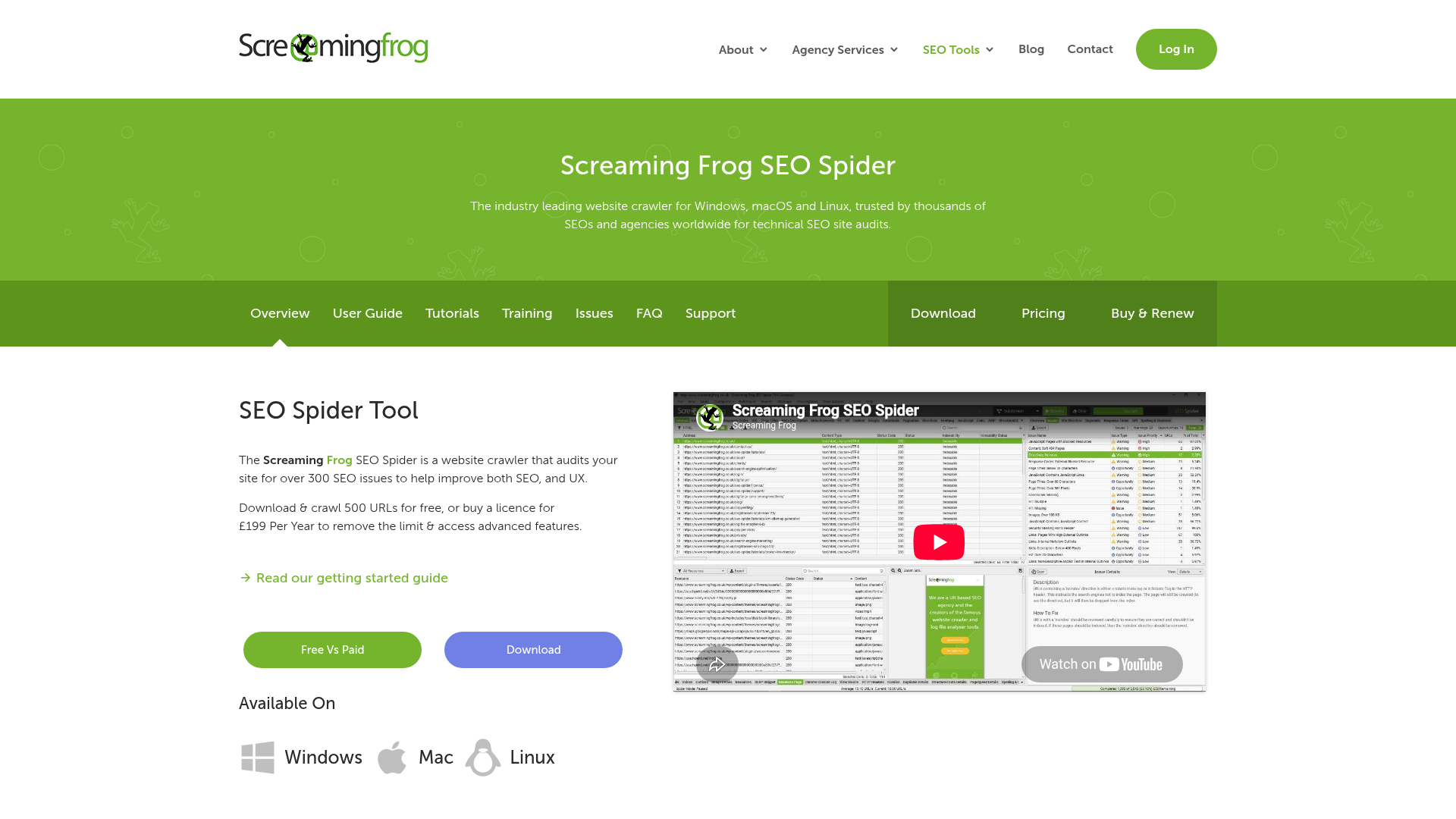
Screaming Frog SEO Spider remains one of the most trusted tools for technical SEO audits, especially for specialists who want detailed crawl analysis and direct control over their workflow. Since launching in 2010, it has built a loyal following among consultants and agency technical leads because it checks redirects, canonicals, broken links, duplicate content, metadata, hreflang, JavaScript rendering, and custom extraction in detail. It’s not the flashiest tool. For many advanced users, that’s part of the appeal.
Core Features
- Deep website crawling
- Redirect and broken link detection
- Metadata, canonicals and duplicate content checks
- Hreflang analysis
- JavaScript rendering
- Custom extraction
- Integrations with GA, GSC and PageSpeed data
Pros
- Serious technical depth: It remains one of the strongest options for detailed, crawl-based auditing.
- Cost-effective for specialists: The annual license is still relatively accessible compared with enterprise subscriptions.
- Highly flexible: Advanced users can customize extraction and shape data analysis in practical ways.
- Trusted by technical pros: It has earned long-standing credibility among experienced SEO practitioners.
- Strong diagnostic value: It’s especially good at finding issues that broader suites sometimes present less clearly.
Cons
- Desktop workflow: Some teams prefer cloud dashboards for collaboration and ongoing monitoring.
- Steeper learning curve: Less technical users can feel overwhelmed early on.
- Weaker executive reporting: Out of the box, it doesn’t feel as polished for client-facing presentation.
Who It’s For
Screaming Frog suits technical SEOs, consultants, and agency specialists who want detailed crawl data and are comfortable in a more hands-on environment. It’s especially useful on larger sites, during migration checks, or in complex diagnostic work, where teams need to inspect issues closely. Very hands-on.
Why technical specialists still rely on Screaming Frog
For many advanced SEO teams, the appeal comes down to control and transparency. Screaming Frog exposes crawl data in a way that makes debugging easier during migrations, redesigns, or large-scale site audits. Teams can segment pages, isolate rendering problems, and validate implementation changes without relying entirely on automated prioritization.
The platform also works well when paired with other systems. Agencies often combine it with reporting dashboards, analytics tools, and broader seo audit tools to create layered workflows that balance technical depth with executive visibility.
Unique Value Proposition
It stands out for a simple reason: it handles deep crawl analysis extremely well. Teams that care more about precision, flexibility, and raw technical detail than all-in-one convenience will still find it highly effective for technical SEO audit work. Less executive polish. More focus on finding issues that other systems may miss.
Pricing: Free up to 500 URLs; paid license $279 per user/year
Website: https://www.screamingfrog.co.uk/seo-spider/
How to choose the right SEO audit tool for your workflow
A lot of comparison articles stop too soon. They list features, mention pricing, and move on. Agencies and SaaS teams often pick the wrong tool for a few clear reasons: they buy more suite than they need, miss the workflow support they actually need, or choose a powerful crawler that nobody on the team uses consistently.
For agencies, the decision generally comes down to the delivery model. If you need white label outputs, scalable content operations, and a system that supports both technical SEO audit work and client execution, Whitelabelseo has the clearest advantage. It supports service delivery more naturally than tools that only surface issues.
When a team already works inside one platform and wants technical auditing added to keyword, backlink, and reporting workflows, Semrush is the most straightforward all-in-one option. If strategy and backlink analysis are closely tied to your prioritization process, Ahrefs makes a lot of sense. If your technical lead wants maximum crawl depth and diagnostic precision, Screaming Frog is still hard to beat.
The better question is: “Which tool helps the team consistently turn findings into fixes, content updates, and measurable growth?” That matters more than asking which tool simply identifies SEO issues.
Workflow fit matters more than feature count
Many teams overvalue feature checklists when evaluating platforms. In practice, consistency matters more. A smaller team using a focused workflow every week often gets better results than a larger team with a bloated stack nobody fully understands.
That is one reason agencies increasingly compare operational systems instead of only comparing crawlers. Resources like Best Agency SEO Tools for White-Label Delivery have become more relevant because execution and reporting now affect retention just as much as diagnostics.
Where each tool stands out most
Here’s the practical breakdown.
- Whitelabelseo: Best for agencies and SaaS teams that need technical SEO audit support, AI content operations, white label scalability, and smoother execution workflows.
- Semrush Site Audit: Best for teams that want an all-in-one suite with a strong audit layer and broad reporting visibility.
- Ahrefs Site Audit: Best for teams that prioritize competitor research, backlink analysis, and technical health in one place.
- Screaming Frog SEO Spider: Best for advanced technical specialists who want deep crawl-level diagnostics and more control.
A technical SEO audit only helps when the output fits how a team actually works day to day, not just what the tool can produce by itself.
For a freelancer, a highly manual setup can work well. A SaaS growth team may need integrated strategic visibility across channels and stakeholders. Different pace, different needs. A multi-client agency, on the other hand, may need repeatability, branding, and faster execution.
What matters most in a technical SEO audit for agencies and SaaS teams
A useful technical SEO audit should answer four questions fast.
First, what is broken right now? That includes crawlability, indexation, redirects, canonicals, internal linking, speed-related issues, duplicate content, and rendering problems. The basics, yes, but important.
Second, what should teams fix first? Many seo audit tools create extra work here. They surface every issue, then leave agencies or SaaS teams to separate business impact from low-priority cleanup on their own.
Third, how will teams implement fixes? Agencies need workflows ready for handoff. SaaS teams need alignment across SEO, product, engineering, and content. Without cross-functional alignment, work stalls.
Why implementation workflows affect results
Finding issues is only one part of the process. Teams also need systems for assigning priorities, tracking progress, and confirming fixes after deployment. Without that operational layer, even excellent technical findings can sit untouched for weeks.
This is where integrated platforms increasingly stand apart from isolated crawlers. Articles such as How to Choose Technical SEO Services That Scale highlight how execution planning has become central to modern SEO operations.
Fourth, can the process scale? If a team manages ten sites or publishes hundreds of pages each month, audit data needs to connect directly to ongoing execution.
That last point matters more now. Newer buyers have become much more selective, and they’re no longer paying for just a crawler. They’re buying an operational edge.
Why Whitelabelseo ranks first in this list
Whitelabelseo lines up more closely than the other tools here with how modern agencies and growth-focused SaaS teams actually work. Traditional audit platforms still matter, but they can require a patchwork of other tools before technical findings turn into a usable client system or a workable content operation. That adds time, stretches onboarding, and creates process friction.
By contrast, this AI-powered white label SEO platform is built for teams that want technical SEO support tied directly to scalable delivery. Agencies need consistency across accounts, SEO work they can provide under their own brand, and workflows that connect technical insight with AI-assisted content execution.
SaaS teams get a different kind of value, and it is just as practical. They do not need to keep technical SEO audit work separate from publishing and optimization. Instead, teams can connect issue detection with content improvements, CMS workflows, and ongoing growth production. When speed matters, that can matter more than feature count alone.
Ready to stop collecting audit data and start shipping fixes?
Many seo audit tools aren’t bad. The real problem is what happens next: teams still have to do too much manual work between diagnosis and delivery, turning clear findings into extra process. Agencies feel that quickly. They end up copying findings into client documents, juggling separate content tools, and rebuilding the same workflow for every account. SaaS teams run into a different version of the same issue: audit insights sit in one place, while implementation and publishing happen somewhere else.
Whitelabelseo closes that operational gap better than the other tools in this comparison. It gives teams a stronger setup for technical SEO audit work while also supporting AI-powered content production, white label workflows, CMS integration, and larger-scale execution, all in one flow. That combination makes it the best fit for agencies and SaaS teams that want more efficiency without giving up quality.
If your current stack feels fragmented, or your audit process creates more admin than action, take a closer look at Whitelabelseo.ai. A more connected SEO workflow helps your team move faster.
Frequently asked questions
Agencies should look beyond issue detection and evaluate how well a tool supports repeatable delivery. Important factors include crawl depth, prioritization, reporting clarity, workflow efficiency, collaboration support, and whether the tool fits client-facing processes. If white label delivery and scalable execution matter, a platform like Whitelabelseo can be especially relevant because it connects technical SEO work to broader service operations.
An effective tool should help your team find meaningful issues quickly, prioritize fixes by impact, and make it easier to move from diagnosis to implementation. The best indicator is not the number of warnings surfaced. It is whether the tool helps improve crawlability, indexation, page quality, internal linking, and publishing efficiency over time.
Pricing varies a lot by tool type. Screaming Frog offers a free version up to 500 URLs and a paid license at $279 per user per year. Semrush starts around $139 per month. Ahrefs has entry pricing from $29 per month, though broader audit use often sits on higher tiers around $129 per month. Costs usually rise based on user seats, projects, and feature access.
Initial findings can appear immediately, but meaningful SEO results depend on implementation speed and issue severity. Some fixes, like broken redirects, blocked pages, or canonical mistakes, can improve site health relatively quickly. Larger gains from internal linking, crawl efficiency, and content refinement often take several weeks to a few months to show up in performance data.
Businesses with growing content libraries, complex site structures, multiple templates, or active acquisition goals benefit the most. That includes SaaS companies, e-commerce brands, publishers, agencies, and service businesses with large websites. Teams managing frequent publishing cycles or migrations usually see especially high value from regular audits.
It depends on your workflow. All-in-one platforms are usually better for teams that want convenience, reporting, and broader SEO visibility in one place. Specialized crawlers are often better for deep technical investigation. For agencies and SaaS teams that need both technical visibility and scalable execution, Whitelabelseo can be a strong fit because it supports the operational side of SEO rather than stopping at diagnostics alone.