Is SEO Still Profitable in 2025?
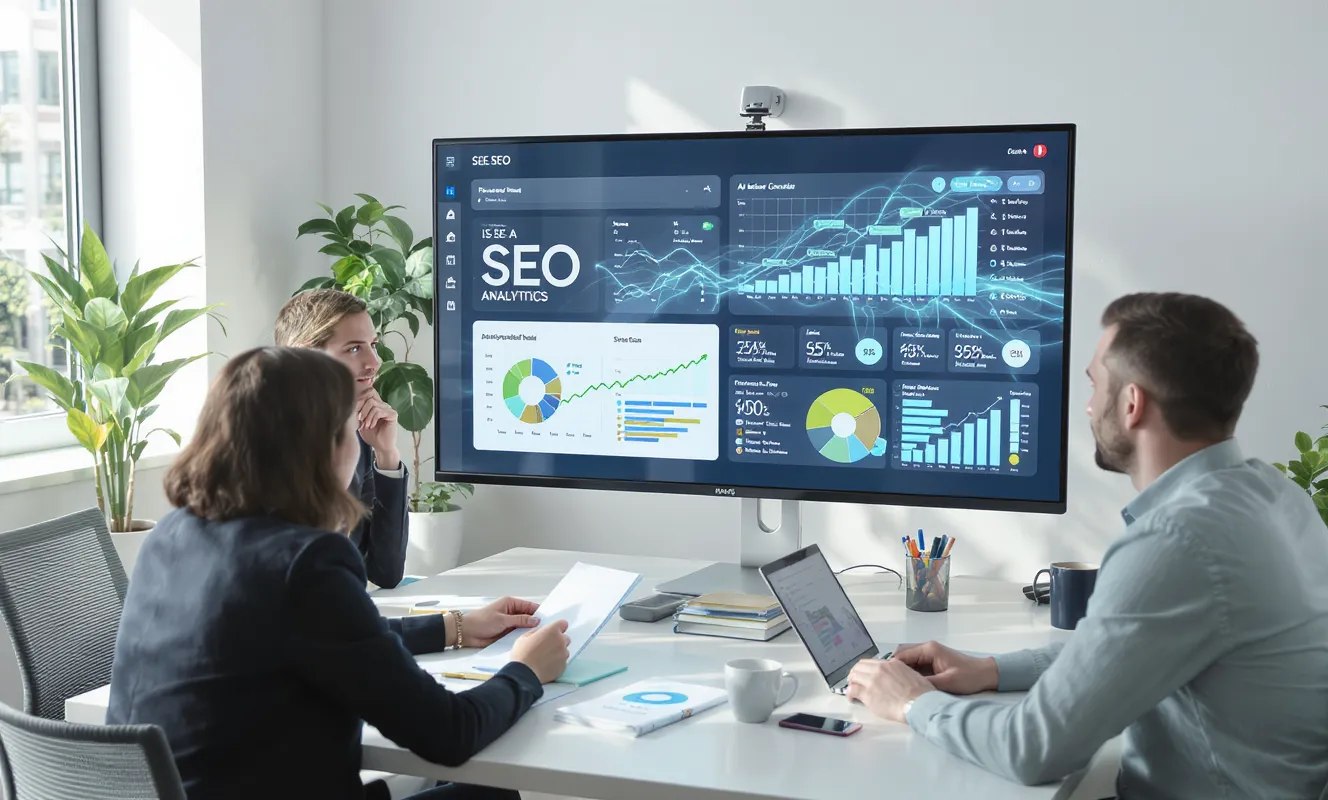
In 2025, SEO is both more competitive and more technologically advanced than ever before. For SEO agencies, SaaS startups, e-commerce brands, and freelancers, the question isn’t just ‘Is SEO still profitable?’, it’s about how to adapt to the rapid changes shaping search visibility.
Organic search continues to dominate, with 53.3% of all website traffic coming from organic results (Digital Silk, 2025). But the SEO landscape is shifting due to generative AI, Google’s E-E-A-T guidelines, and the rise of zero-click searches. This article explores whether SEO is still profitable in 2025 and how businesses can capitalize on emerging opportunities.
SEO remains the most cost-effective long-term growth channel for brands, but the playbook has changed with AI reshaping search intent and click patterns.
The State of SEO 2025 Landscape
Organic search dominance is still clear. Google commands 81.95% of the global search engine market and 95% of the mobile search market (Exploding Topics, 2025). The top three organic results on Google receive 68.7% of clicks (AIOSEO, 2025), making ranking in those coveted spots more valuable than ever.
| Metric | Value | Year |
|---|---|---|
| Organic traffic share | 53.3% | 2025 |
| Google market share | 81.95% | 2025 |
| Top 3 click share | 68.7% | 2025 |
The integration of generative AI into search engines has been the biggest disruption. AI summaries often answer queries directly, leading to more zero-click searches. For businesses, this means a shift in strategy toward content that drives engagement and brand authority even when clicks are reduced. Whereas traditional SEO relied heavily on driving traffic from keyword-rich pages, the modern approach involves ensuring your brand is embedded within AI-driven answers and recommendation systems. This requires not only optimizing for keywords but also for entities, the people, places, and concepts that AI recognizes and associates with expertise.
Businesses in 2025 are also facing increased competition from AI-native publishers who can generate vast amounts of content quickly. However, these publishers often lack the depth and trust signals that human-led brands can provide. By focusing on unique data, proprietary insights, and interactive formats, companies can maintain visibility in a crowded search environment. The winners will be those who balance technical optimization with brand storytelling that resonates both with algorithms and audiences.
Ranking in Google is no longer just about keywords and backlinks, it’s about demonstrating real-world expertise and trustworthiness through E-E-A-T principles.
Adapting SEO 2025 Strategies for AI-Driven Search
Generative AI is changing how users interact with search results. Instead of clicking through to multiple sites, users may get their answers directly from AI-generated snippets. This increases the importance of creating content that AI tools reference and cite. To achieve this, marketers need to think beyond traditional on-page SEO and focus on building content ecosystems that AI can easily parse.
For agencies and SaaS startups, this means:
- Building structured data and schema markup to make content machine-readable and ensure AI tools can extract precise, contextual information
- Leveraging brand voice customization in AI-generated content to maintain consistency and build recognition when snippets reference your brand
- Creating multi-format assets (video, audio, infographics) to improve visibility in AI-enhanced SERPs, as AI often prefers summarizing from diverse media sources
- Embedding factual accuracy, unique statistics, and proprietary research into content to increase the likelihood of citation by AI systems
An example of adaptation is creating “AI-ready” content hubs, interconnected pages that cover a topic comprehensively, tagged with semantic metadata, and supported by multimedia. When AI systems scan for authoritative sources, these hubs act as central repositories of knowledge, increasing brand exposure even in zero-click contexts. This approach also benefits voice search, as conversational AI assistants tend to pull from well-structured, authoritative sources.
For deeper insights on preparing your agency for AI-driven changes, see how to position your agency as a one-stop shop with white-label partners.
The Role of E-E-A-T in SEO 2025
Google’s emphasis on Experience, Expertise, Authoritativeness, Trustworthiness is stronger than ever. This is not just a guideline, it’s a ranking necessity. In 2025, search algorithms are increasingly capable of verifying credentials, cross-referencing claims, and detecting content that lacks authenticity.
Ways to comply:
- Publish content authored by real experts with verifiable credentials, such as LinkedIn profiles, academic citations, or recognized certifications
- Include case studies and real-world examples that demonstrate practical application of knowledge, making your content more valuable to both readers and algorithms
- Maintain transparent sourcing and link to authoritative references, ensuring outbound links reinforce trust rather than dilute it
- Encourage user-generated reviews and testimonials to enhance perceived trustworthiness
For white-label SEO providers, integrating E-E-A-T compliance into automated content workflows is a differentiator that can win agency contracts. This could involve automated author bylines tied to verified professional profiles, AI-assisted fact-checking before publication, and integration with reputation management tools to monitor and respond to feedback. The brands that excel in E-E-A-T will be those that treat it not as a checklist but as an ongoing commitment to quality and transparency.
White-Label SEO 2025 Automation Opportunities
White-label AI SEO platforms, such as WhiteLabelSEO.ai, allow agencies to scale content production without expanding internal teams. In 2025, this is critical as demand for SEO services grows alongside complexity. Automation enables agencies to serve more clients with fewer resources while maintaining quality.
Key benefits:
- Custom brand voice integration that ensures all content feels native to the client’s identity
- Seamless CMS publishing with automated scheduling and optimization recommendations
- Automated technical SEO audits that flag issues in real time and propose fixes instantly
- Scalable link building campaigns powered by AI prospecting and outreach personalization
Agencies that adopt these tools can increase profitability by reducing labor costs and delivering results faster. For example, an agency using automation can produce 10 optimized articles per week for a client instead of 3, without sacrificing depth or accuracy. This scalability also allows agencies to test and deploy new strategies, such as targeting emerging keywords, more rapidly than competitors. The combination of automation and human oversight creates a hybrid workflow that balances efficiency with strategic creativity.
Learn more about what services are typically included in white-label SEO packages to maximize agency offerings.
Zero-Click Search Strategies in SEO 2025
Zero-click searches are here to stay. These occur when users get their answers directly from the SERP, often via featured snippets, knowledge panels, or AI summaries. To maintain profitability, marketers must adjust their goals from pure click acquisition to brand visibility and engagement.
To adapt:
- Target transactional and navigational queries, which still drive clicks because users must complete actions or access specific sites
- Optimize for long-tail keywords that AI summaries often overlook, providing opportunities for niche dominance
- Create content for niche topics with high commercial intent, ensuring that even if AI displays part of the answer, users have incentive to click for the full context
- Build “information-plus” content, articles that combine factual answers with interactive tools, calculators, or downloadable resources that cannot be replicated in SERPs
| Search Type | CTR Potential | Profitability |
|---|---|---|
| Transactional | High | High |
| Navigational | Medium | Medium |
| Informational (short) | Low | Low |
Brands that excel in zero-click environments often measure success by impressions, brand mentions, and assisted conversions rather than direct clicks. For instance, appearing prominently in an AI-generated answer about “best CRM tools” may not yield an immediate click, but it builds brand familiarity that influences later purchasing decisions.
Local and Video SEO 2025 Gains
Local SEO continues to deliver high conversion rates for SMBs because proximity and trust remain powerful drivers of purchase decisions. In 2025, location-based personalization in search results has become more precise, incorporating real-time factors like store inventory and current promotions.
Video SEO is also booming, Google shows video thumbnails in 26% of search results (AIOSEO, 2025), and YouTube remains the second largest search engine globally. Short-form videos tailored to specific queries are particularly effective, as they can appear in both traditional SERPs and social search platforms like TikTok and Instagram.
Agencies should:
- Optimize Google Business Profiles with up-to-date hours, services, and images, as incomplete profiles often miss out on local pack rankings
- Produce short-form videos targeting specific queries, such as “how to fix a leaking faucet” for a plumbing service, ensuring each video is tagged with relevant keywords
- Incorporate transcripts and metadata for video content, making it accessible to search engines and improving accessibility compliance
- Experiment with live video content tied to seasonal events or promotions, which can rank quickly in local search results
Combining local and video SEO can amplify results. A restaurant, for example, could post short videos of daily specials, optimized with local keywords, to attract both search and social traffic.
AI-Powered Link Building in SEO 2025
Link building remains a top ranking factor, with 92% of marketers confident it will stay relevant for at least the next 5 years (SeoProfy, 2025). However, the process in 2025 is far more data-driven and automated.
AI-powered workflows include:
- Identifying link opportunities through AI-driven analysis of competitor backlink profiles, niche directories, and high-authority blogs
- Personalizing outreach emails using sentiment analysis and behavioral data to improve response rates
- Tracking backlink performance in real-time dashboards, allowing quick action if valuable links are lost
- Predicting future link value based on trends, relevance, and domain authority trajectories
For example, an AI tool might detect that a competitor’s link from a popular industry blog is broken, then automatically generate and send a tailored pitch to replace it with your content. This level of automation not only speeds up link acquisition but also ensures that efforts are focused on high-impact opportunities.
ROI Measurement for Automated SEO 2025
Measuring profitability in 2025 requires tracking more than just traffic. Agencies and brands must monitor:
- Conversions from organic search, segmented by query type and funnel stage
- Brand mentions in AI-generated snippets, which indicate influence even without clicks
- Engagement on multi-format content, including dwell time, shares, and repeat visits
- Assisted conversions, where SEO content plays a role in multi-touch sales journeys
Integrating analytics tools with AI SEO platforms provides agencies with clear ROI metrics, making it easier to justify budgets. For example, a dashboard could show that while direct organic clicks dropped 8% due to zero-click searches, assisted conversions increased 15% because brand visibility in AI summaries drove later engagement. This deeper insight shifts the conversation from “traffic loss” to “visibility gain” and helps align SEO strategies with broader business goals.
Future Trends and Predictions
Looking ahead, several trends are poised to reshape SEO further:
- Voice search will continue to grow, requiring conversational keyword targeting and optimization for natural language queries
- AI will handle more technical SEO tasks, from site audits to crawl budget optimization, freeing humans to focus on strategic planning and creative campaigns
- Search personalization will increase, making first-party data collection vital for tailoring content to individual user preferences
- Visual search will expand, with image recognition allowing users to search by photos, necessitating alt text optimization and visual content strategies
- Sustainability and ethical considerations in content sourcing may influence ranking, as search engines respond to user demand for responsible brands
Agencies that anticipate these shifts can position themselves as forward-thinking partners, offering clients not just current best practices but future-ready solutions.
Conclusion
SEO in 2025 is still profitable, but the methods have evolved. Agencies, SaaS startups, e-commerce brands, and freelancers must embrace AI-driven tools, prioritize E-E-A-T compliance, and diversify content formats to stay competitive.
Key takeaways:
- Organic search remains dominant, but click-through patterns are changing due to AI summaries and zero-click searches
- Success requires adaptive strategies that focus on visibility, credibility, and multi-format engagement
- White-label automation is a major profitability driver for agencies, enabling scalability without sacrificing quality
For those willing to innovate, SEO is not only profitable in 2025, it’s a growth engine ready to be leveraged with the right tools and approach. The future belongs to those who blend human creativity with machine efficiency, delivering content that resonates with both audiences and algorithms.