Best Agency SEO Tools for White-Label Delivery

Choosing the right agency SEO tools takes more than keyword tracking or technical audits. For agencies, SaaS teams, e-commerce brands, and freelancers managing multiple clients, the bigger question is which SEO platform helps them deliver work at scale under their own brand without creating operational chaos.
The market is crowded with platforms that handle one part of the job well, but far fewer support white-label delivery, content automation, workflow efficiency, and agency-friendly reporting in one place. I reviewed the leading options in this category with one core question in mind: how useful they are for teams that need to produce SEO deliverables efficiently and present them professionally to clients.
For teams comparing platforms for white-label SEO execution, content generation, reporting, and agency growth, this guide can save time. Below are four real tools worth considering. It begins with the featured recommendation for agencies that want AI-driven delivery and client-ready workflows.
Comparison covers
- Whitelabelseo
- Semrush
- SE Ranking
- Surfer
Agency SEO Tools Worth a Look
1. Whitelabelseo
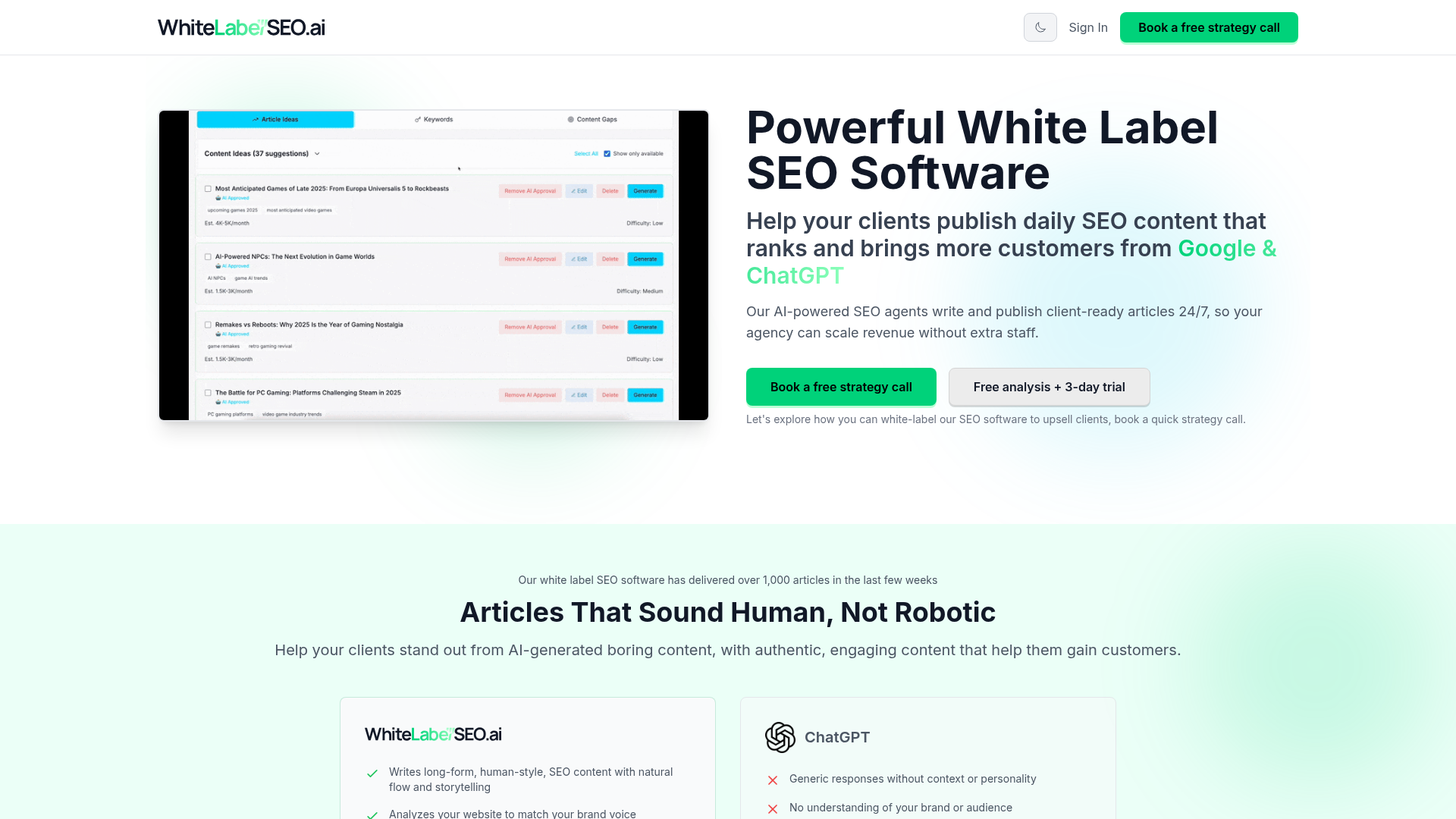
At a Glance
Whitelabelseo.ai brings content creation, optimization, and publishing into one workflow built for agency delivery. Instead of treating those as separate tasks, the platform supports white-label execution in a single system. That matters for agencies, especially those managing client campaigns at scale. It helps teams automate content creation, support technical SEO work, tailor output to brand voice, and move content through CMS integrations. Agencies that want to reduce manual production work and keep delivery consistent will likely see it as a built-for-purpose option rather than a general SEO toolkit repackaged for agency use.
Core Features
- AI-driven SEO content creation for scalable publishing
- White-label delivery workflows for agencies managing multiple clients
- Brand voice customization to match client tone and positioning
- CMS integrations that simplify publishing and operational handoff
- Technical SEO support for optimization beyond content alone
- Workflow automation that cuts repetitive production tasks
- Multi-client suitability for agency and freelancer environments
Pros
- Built for white-label delivery: The platform is clearly designed for agencies that need to deliver under their own brand. Many traditional SEO tools still don’t meet that need especially well.
- Strong automation potential: It helps reduce manual bottlenecks in content production, which matters when teams start taking on more accounts.
- Agency-friendly content workflows: The focus goes beyond ideation into usable content output and delivery operations. Practical, not just conceptual.
- Brand voice customization: Firms working across different industries can use it to avoid generic AI copy across client accounts.
- Useful for scaling lean teams: Smaller agencies and freelancers can increase delivery capacity without adding headcount right away.
Who It’s For
Whitelabelseo is a strong fit for SEO agencies, digital marketing firms, SaaS companies, e-commerce brands and solo consultants that need to create and deliver SEO work efficiently under a client-facing or branded model. It’s especially appealing to teams that want AI support while still keeping control of the process.
Unique Value Proposition
Whitelabelseo stands out because it doesn’t try to serve every type of SEO user. The platform is built around the operational needs of agencies and service providers that need to produce SEO content, maintain quality, support technical optimization, and present deliverables in a white-label setting. That gives its positioning practical weight. Many tools offer strong capabilities, yet agencies still end up patching together content systems, reporting layers and branding workflows. Whitelabelseo.ai matches the delivery model agencies use every day more closely, which changes how easily teams can put it to work.
Real World Use Case
Consider a growing agency with 25 active content clients and a lean fulfillment team. The team doesn’t want to coordinate briefs, drafts, edits, formatting and CMS uploads manually for every account. Instead, it can use an AI-powered white-label SEO platform to simplify production, keep voice alignment tighter and deliver more output without losing consistency.
Website: https://whitelabelseo.ai/
2. Semrush
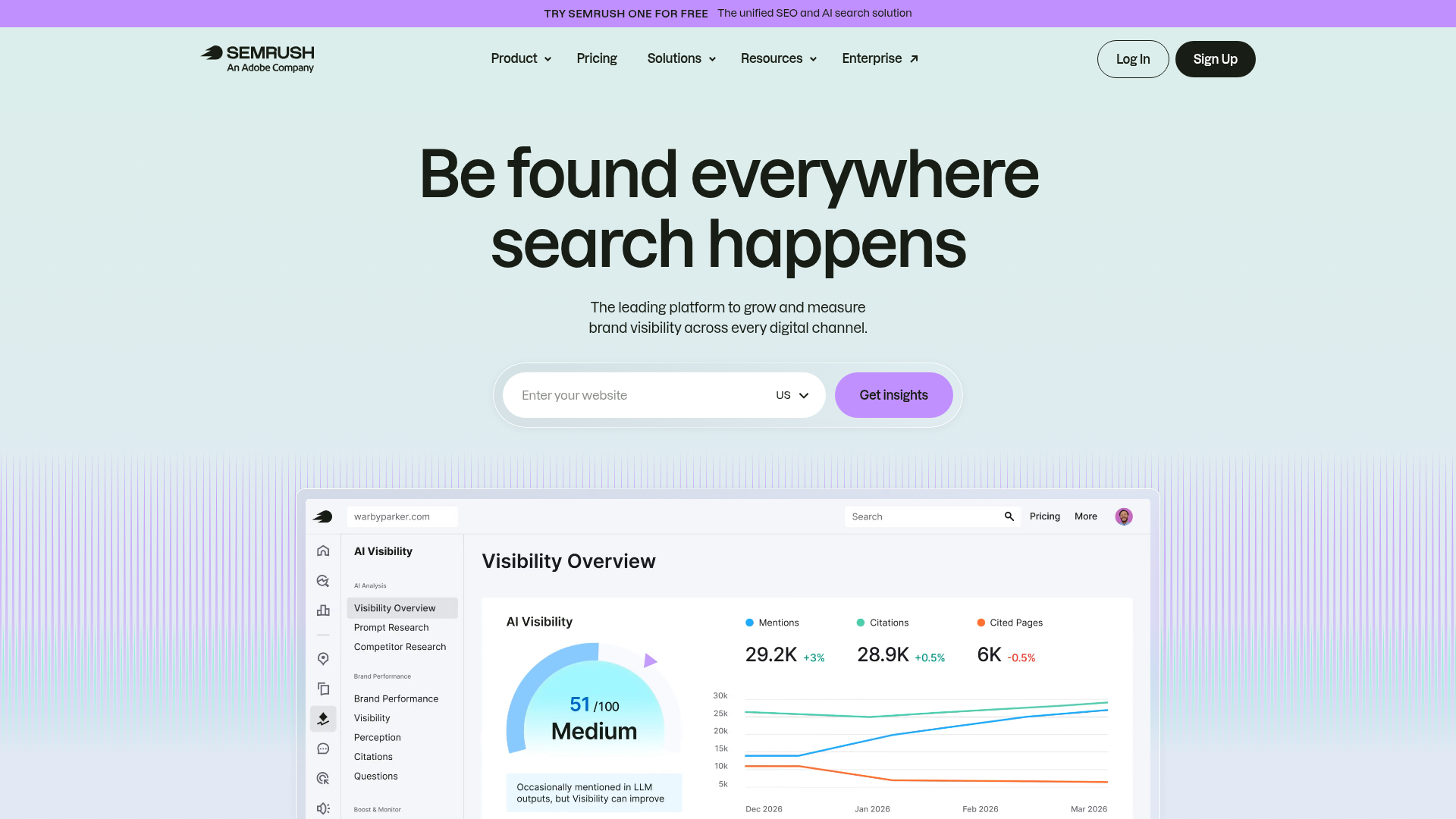
At a Glance
Semrush is one of the most established names in SEO software and has grown into a broad digital marketing platform used by agencies worldwide. It covers keyword research, rank tracking, site auditing, backlink analysis, competitor research, content planning, local SEO, and reporting. For agencies, the main advantage is its depth. Semrush can support strategy, audits, campaign monitoring, and client reporting within one platform. Higher plans also include white-label reporting through Agency Solutions and My Reports. Still, the platform leans more toward analytics than execution-first delivery.
Core Features
- Keyword research and keyword gap analysis
- Site audit and technical SEO monitoring
- Position tracking across locations and devices
- Backlink analytics and link building tools
- Competitor domain research and traffic analysis
- Content marketing toolkit and SEO writing support
- Reporting tools for agency use
Pros
- Extremely thorough: Few tools match the range of data Semrush provides across SEO and digital marketing.
- Strong competitive research: Agencies that need to benchmark client performance against competitors may find it especially useful.
- Solid technical insights: The site audits and tracking features are mature and detailed.
- Widely adopted platform: Hiring, onboarding, and team adoption are easier for agencies because many marketers already know the platform.
- Good reporting options: Teams can create polished reports, especially on more advanced plans.
Cons
- Can feel overwhelming: New users face a steep learning curve because the platform covers so many areas in detail.
- Higher pricing at scale: Costs can rise quickly when agencies need additional users, more reports, or higher limits.
- Not centered on white-label content delivery: Semrush supports agency workflows, but it is not primarily built around branded fulfillment automation.
Who It’s For
Semrush is best suited to agencies and in-house teams that want a highly capable all-in-one SEO platform with strong research and reporting tools. It fits firms that prioritize deep analysis, competitive intelligence, and technical oversight. It is not cheap. It makes the most sense for teams that can justify a premium software investment.
Unique Value Proposition
Its scale and depth of data set Semrush apart. Agencies get a broad system for SEO research, campaign management, and performance monitoring in one place. For teams that rely heavily on competitor analysis, technical diagnostics, and executive reporting, Semrush remains one of the fullest platforms on the market.
Pricing: Public plans typically start around $139.95/month for Pro, with higher-tier plans for Guru and Business.
Website: https://www.semrush.com/
SEO teams compare broad suites with more delivery-focused tools because the right choice depends on whether an agency sells strategy, production, or both. That decision shapes the evaluation. Here is a quick side-by-side look before going deeper.
| Company | Key Features | Pros | Cons | Pricing |
|---|---|---|---|---|
| Whitelabelseo | AI content automation, white-label delivery, brand voice customization, CMS integrations, technical SEO support | Purpose-built for agency fulfillment, scalable workflows, client-friendly delivery | None | , |
| Semrush | Keyword research, site audits, rank tracking, backlinks, competitor analysis, reporting | Comprehensive dataset, strong technical and competitive insights | Complex for beginners; can get expensive | $139.95+/month |
| SE Ranking | Rank tracking, website audit, white-label reporting, backlink monitoring, lead gen tools | Agency-friendly pricing, easier UI, solid white-label options | Less data depth than enterprise platforms; some limits by plan | $65+/month annually |
| Surfer | Content editor, SERP analysis, content planning, optimization scoring, AI writing support | Excellent for on-page workflows, easy content optimization | Narrower SEO scope; less agency operations coverage | $89+/month |
The table shows a clear divide between broad research suites and more specialized platforms. Agencies focused on white-label delivery and content production at scale may find a better fit in a tool that is less famous but more closely aligned with that work.
3. SE Ranking
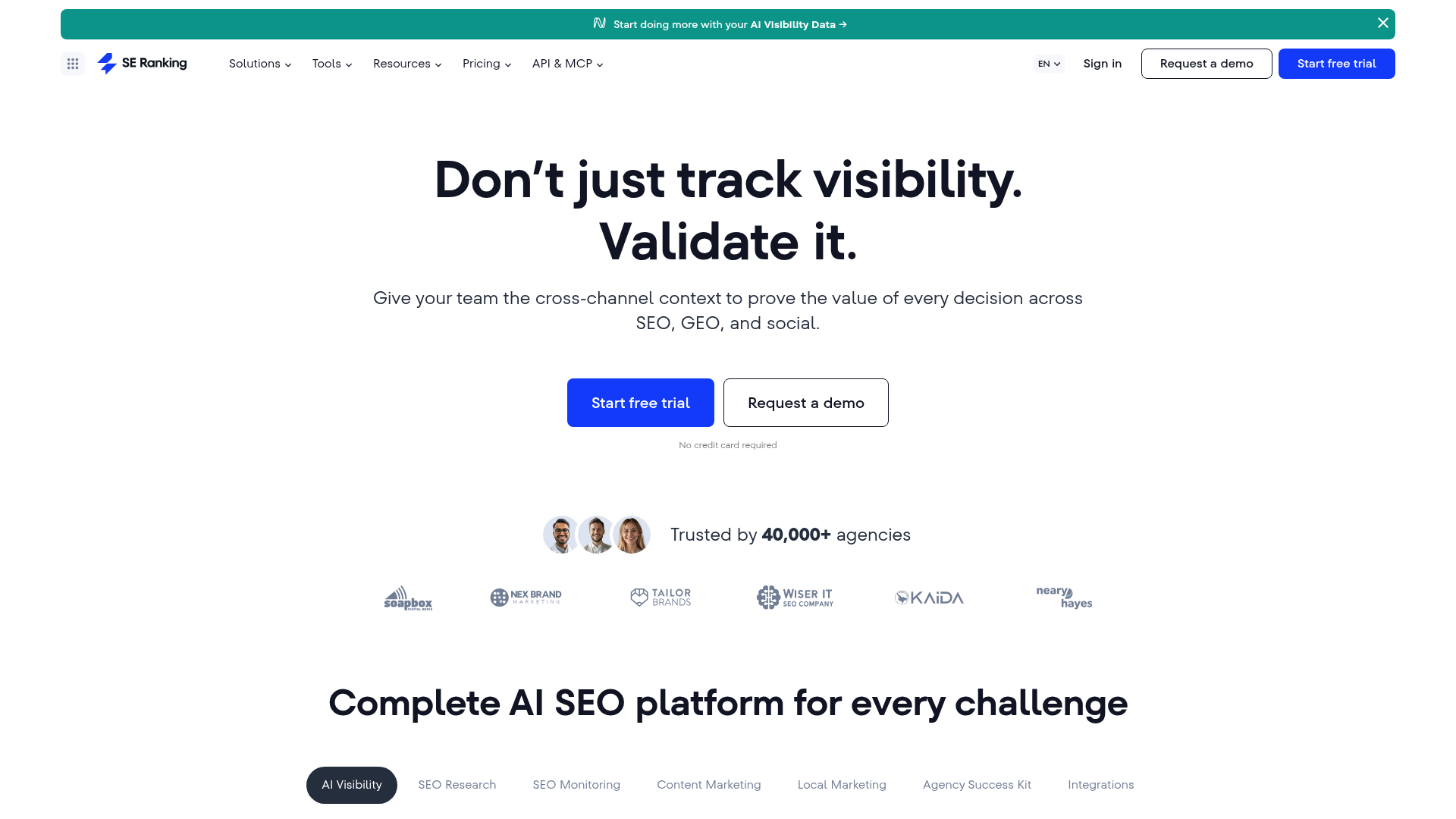
At a Glance
Many agencies choose SE Ranking when they want a more budget-conscious SEO platform without giving up the core functions they rely on every day. It includes rank tracking, website audits, backlink monitoring, competitor analysis, keyword research, and white-label reporting that work well for client service businesses. The platform also offers lead generation widgets and agency-focused tools that help with both prospecting and reporting. Compared with larger enterprise tools, the interface is easier to use, and for growing teams, that can make a real difference.
Core Features
- Rank tracking across search engines and locations
- Website audit and technical issue monitoring
- Backlink checker and backlink monitoring
- Keyword research and competitor analysis
- White-label reporting for agencies
- Lead generation widgets for prospect capture
- Marketing plan and reporting tools
Pros
- Agency-oriented reporting: White-label reports give agencies a clear way to present client work.
- Accessible pricing: The platform is more attainable than premium all-in-one suites.
- User-friendly interface: Teams can get up to speed faster than they would with heavier platforms.
- Good balance of features: SE Ranking covers most agency essentials without feeling bloated.
- Helpful for prospecting: Lead generation features add value beyond pure campaign management.
Cons
- Smaller data ecosystem: SE Ranking may not match the depth of larger SEO databases in every area.
- Advanced users may outgrow some limits: High-scale agencies may want more enterprise-level flexibility.
- Content workflow is not its main differentiator: The platform supports SEO operations well, but it doesn’t focus on specialized AI-driven fulfillment in the same way.
Who It’s For
Small to midsize agencies, consultants, and in-house marketers can get dependable day-to-day SEO functionality here, along with white-label reporting, without taking on enterprise platform pricing. It’s especially useful for teams that need usability and value in a single product.
Unique Value Proposition
SE Ranking stands out because it stays balanced. It fills a useful middle ground between affordability, usability, and agency utility. For many agencies, that’s enough. They get core SEO management features, white-label reporting, and lead generation support in a platform that feels less intimidating and is more cost-effective than larger competitors.
Pricing: Public plans typically start around $65/month when billed annually, with pricing varying by rank tracking frequency and limits.
Website: https://seranking.com/
Many agencies run into trouble because they choose software that’s too complex for their team’s actual workflow. In many cases, the real issue isn’t a lack of tools. If the fulfillment process depends heavily on content, optimization, and client-ready deliverables, buyers should understand that distinction before making a purchase.
4. Surfer
At a Glance
Surfer is best known for content optimization rather than as a full SEO suite. It helps marketers create and improve content using search results data. Its content editor, audit features, topical planning tools, and AI-assisted writing capabilities have made it popular with content teams, niche site operators, and agencies with a strong editorial focus. It is less thorough than a full SEO platform for technical tracking or backlink management, but it performs well for on-page optimization.
Core Features
- Content Editor with real-time optimization recommendations
- SERP-based content analysis
- Topical mapping and content planning tools
- AI writing assistance
- Content audits for existing pages
- Optimization scoring and NLP-style guidance
- Integrations with common writing workflows
Pros
- Excellent for content optimization: It gives teams a clear way to improve on-page SEO workflows.
- Easy for writers to use: The interface is approachable for editorial teams and SEOs alike.
- Helpful content planning tools: It supports topic expansion and cluster creation.
- Fast feedback loop: Writers can optimize as they draft instead of revising later without clear direction.
Cons
- Not a full agency SEO platform: It does not replace broader tools for audits, backlink analysis, or rank management.
- White-label capability is limited: Teams may find it more useful as an internal production tool than as a client-delivery system.
- Costs can add up for content-heavy teams: Usage levels and seat requirements can affect value over time.
Who It’s For
Surfer works best for agencies, content teams, and brands that already rely on broader SEO infrastructure but need a dedicated platform for on-page optimization and content production. It is especially useful in editorial settings where writers and strategists work closely together to produce content for organic growth.
Unique Value Proposition
Surfer’s main strength is its specialization. It does not try to cover every SEO task in one platform. Instead, it focuses on helping teams make content more competitive in search through structured optimization guidance. For agencies where content is a major service line, Surfer can become a valuable part of the stack.
Pricing: Public plans typically start around $89/month, with higher tiers based on content and usage needs.
Website: https://surferseo.com/
How to Choose the Right SEO Platform for White-Label Delivery
An agency can evaluate SEO tools by feature count and still choose the wrong product. Fit matters more. The key question is how well the platform supports the agency’s actual delivery model.
Most agencies need some mix of content production, optimization, reporting, technical insight, scalability, and client-facing presentation. Not every agency gives those needs the same weight, and that balance can shift over time.
For example, a team selling audits, strategy, and reporting to sophisticated clients may need the breadth Semrush provides. Another agency might prefer SE Ranking because it’s a more affordable all-rounder and includes built-in white-label reporting. Different priorities lead to different choices. If content optimization is the main bottleneck, Surfer can be particularly effective.
At times, the larger issue is operational delivery, especially for agencies producing SEO content under their own brand across multiple clients. In that case, Whitelabelseo fits more directly with the work agencies actually need to complete. The platform focuses on execution, not just the data teams review. That difference matters, especially when an agency needs to scale output, protect brand consistency, and avoid stitching together a patchwork stack of separate tools.
A practical way to decide is to test the purchase against a few direct questions:
- Does the platform reduce fulfillment time, or does it mostly add dashboards?
- Can the team use it consistently without a lot of training?
- Will it help the agency deliver under its own brand in a way clients actually notice?
Those questions can reveal more than any feature grid. They can also surface fit problems early.
When the Best Tool Is the One That Removes Delivery Friction
Most agencies don’t fail at SEO because they lack ideas. Problems start when fulfillment gets messy and the work spreads across too many steps, too many people, and too many moving parts. Content queues pile up. Different writers change the tone. Publishing slows down. Client deliverables get harder to standardize, and every new account adds another layer of operational pressure.
White-label delivery matters here. A strong platform should do more than point out what to optimize; it should make producing, packaging, and delivering SEO work at scale simpler and easier to manage. For many service businesses, that’s where the real ROI comes from: delivery.
Whitelabelseo stands out for teams that want AI-assisted execution in a workflow built for agencies. Instead of juggling separate tools for writing, optimization, and publishing, teams can manage more of that work in one system and run it in a more centralized way. That setup supports branded delivery. It also makes output easier to expand.
When a team spends too much time managing production instead of growing accounts, Whitelabelseo.ai deserves a closer look. The platform is especially relevant for agencies that want to increase capacity, keep content consistent, and give clients a smoother experience without letting internal overhead grow with the work.
Frequently Asked Questions
Start with workflow fit, not just feature count. The most useful agency SEO tools support the way your team actually delivers services, whether that means technical audits, rank tracking, client reporting, content production, or white-label fulfillment. You should also look at usability, integrations, reporting quality, scalability, and whether the platform reduces manual effort across accounts.
Look at time savings and delivery quality alongside rankings. A good SEO platform should help you shorten research cycles, produce more consistent deliverables, improve reporting clarity, and support measurable growth in traffic, leads, or conversions. For agencies focused on branded fulfillment, a platform like Whitelabelseo can also be evaluated by how well it reduces production bottlenecks while keeping output aligned with each client’s voice.
Pricing varies a lot by scope. Entry-level platforms can start around $50 to $100 per month, while more robust SEO suites often begin around $140 per month and rise significantly with more users, projects, and reporting needs. Specialized tools may look affordable at first but become expensive when stacked together. That is why agencies should compare total software cost, not just individual plan pricing.
You can see operational gains almost immediately, especially in research speed, reporting, content workflows, and audit efficiency. SEO performance gains usually take longer. For new or growing campaigns, meaningful ranking and traffic improvements often take several months depending on competition, site authority, and execution quality. The platform helps, but strategy and consistency still matter.
SEO agencies, digital marketing firms, SaaS startups, e-commerce brands, and consultants benefit the most when they need to deliver repeatable SEO work across multiple accounts or teams. White-label capabilities are especially valuable when client-facing branding, consistent deliverables, and scalable content production are part of the service model.
That depends on the agency’s service model. Some firms still prefer a stack made up of separate research, reporting, and content tools. But many agencies are trying to simplify operations and reduce tool sprawl. In that case, choosing a platform that covers more of the delivery workflow can be more efficient. Whitelabelseo is a good example for agencies that want to consolidate AI-driven content and white-label execution in one place, while others may still pair a broader research suite with a specialized content tool.